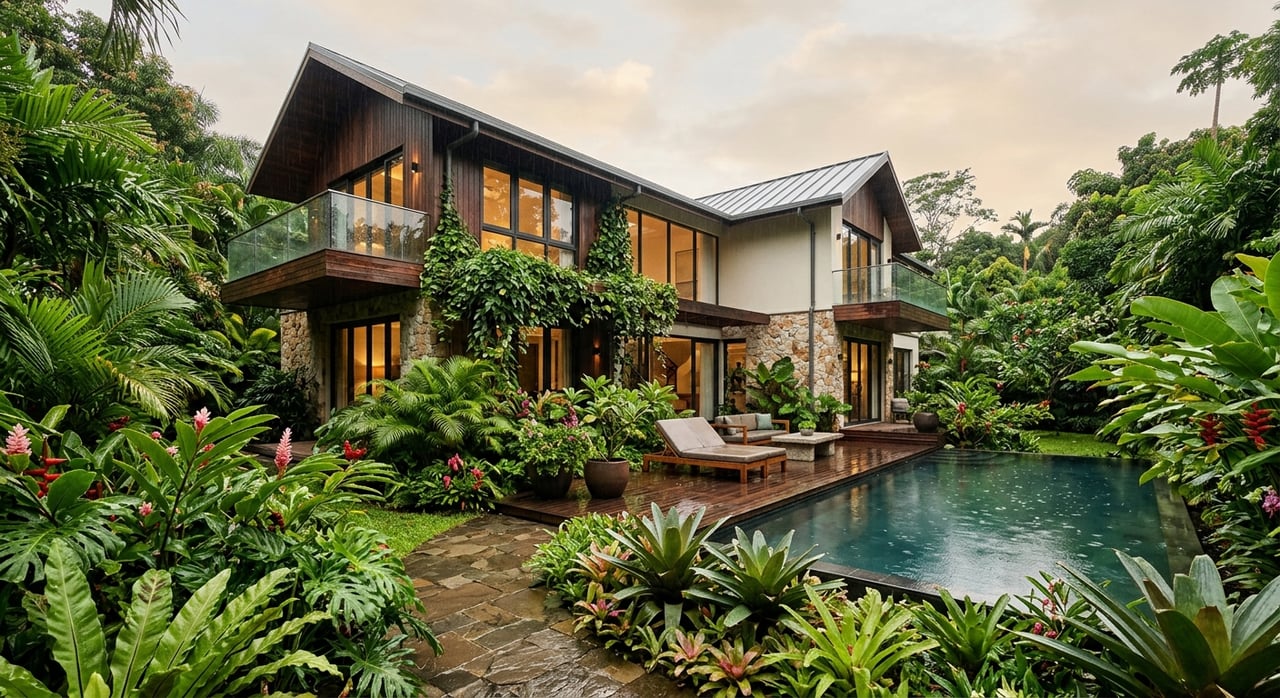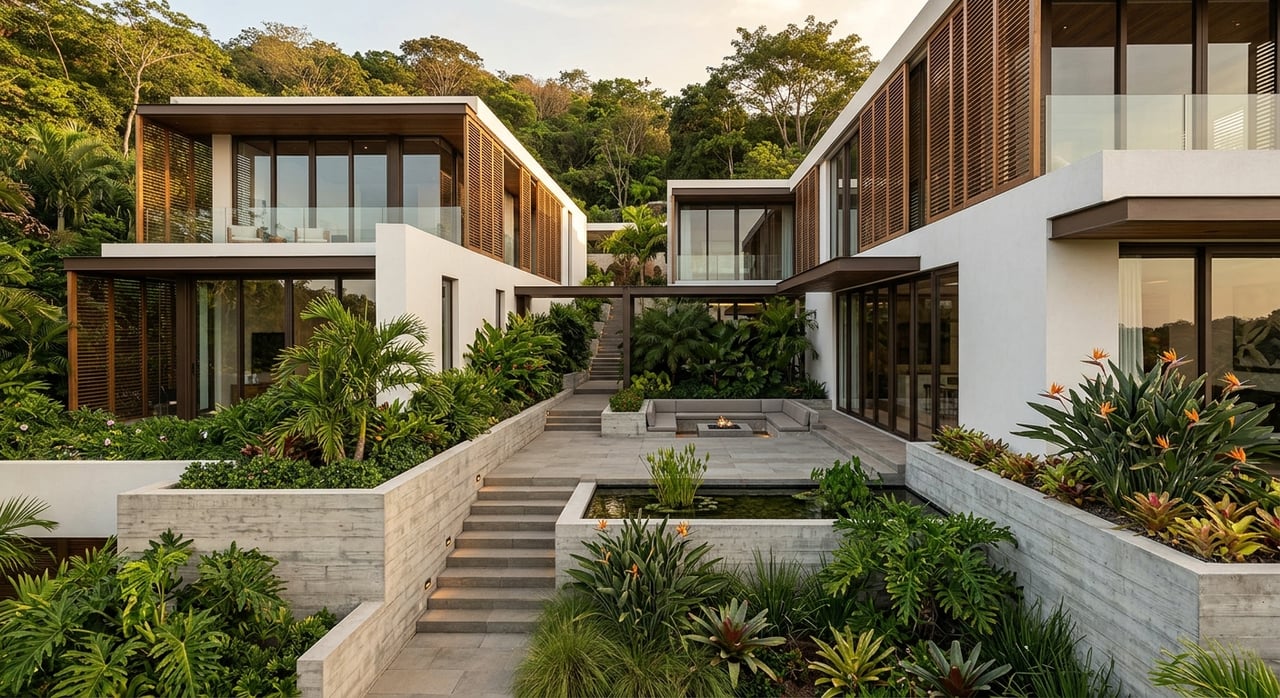
If you are picturing several homes stepping down an Ojochal hillside with privacy, views, and shared amenities, it is easy to start with architecture. In practice, the smarter first move is to treat the project as a land, utility, and permit question before you think about floor plans. When you understand what the parcel can legally and physically support, you can plan a compound that is more efficient, more buildable, and far less likely to hit costly surprises. Let’s dive in.
Start With Land Use
In Ojochal, the first question is not how many homes fit on the land by eye. The first question is whether the parcel can legally support your intended use. For properties in the Municipality of Osa, the process begins with the cadastral plan and deed so the owner can request a Criterio de Uso de Suelo.
The municipality also asks for water availability from ASADA or AyA and electricity availability from ICE before design begins. This matters because a beautiful hillside parcel may still face limits that affect whether multiple dwellings are possible. If you assume first and verify later, you can end up redesigning the entire project.
If a property is within the coastal 200-meter strip, the Maritime-Terrestrial Zone rules can add another layer of restriction. That can override assumptions you might make about a standard private lot. For that reason, every multi-home concept should begin with legal fit, not visual potential.
Why Unit Count Comes Later
A compound for extended family, shared ownership, or boutique rental use usually has more moving parts than a single-home build. Setbacks, access, protected areas, and utility documentation all affect the real design envelope. What looks like space for several residences on an aerial image may shrink quickly once those factors are applied.
The key planning question is simple: can the lot support the full program you want after all legal and technical constraints are accounted for? That is the foundation of a smart acquisition strategy in Ojochal’s hills.
Evaluate Slope Early
Hillside feasibility in Ojochal is shaped by slope, drainage, and protected areas. Costa Rica’s urbanization rules require a preliminary soil and terracing study for land above 15 percent slope. Above 30 percent slope, a stability study is required.
Those thresholds are especially important for buyers considering stepped home sites, guest villas, or a compound with shared outdoor areas. On sloped land, usable building area is not the same as total lot area. The more dramatic the hillside, the more important it becomes to design around stable platforms instead of forcing maximum density.
Build Around Stable Platforms
For a multi-home compound, the best layouts often come from identifying the most stable and efficient building pads first. That approach can reduce excessive cut-and-fill work, simplify retaining strategies, and help control long-term maintenance. It also tends to create a more comfortable relationship between structures, outdoor living areas, and access roads.
This is one reason experienced buyers often pause before finalizing a unit count. The hillside itself usually tells you what the right scale of development should be.
Account For Drainage And Water Flow
Stormwater planning is not a detail to solve later. The regulations require drainage to be designed so water exits the property properly, avoids erosion and ponding, and receives municipal authorization at the discharge point. In a hillside setting, that can become one of the most important cost and design variables in the entire project.
For compounds, drainage has to work across driveways, roofs, terraces, retaining structures, and landscaped areas. If several homes share one site, unmanaged runoff can affect both the build itself and the long-term durability of the property. Good planning here protects the land and the investment.
Wastewater Is Separate
If the property does not connect to sanitary sewer service, infiltration testing is required. If topography is materially altered, a new infiltration test must be completed at final levels. That means site engineering and wastewater planning should stay coordinated from the start.
Pluvial drainage must be designed separately from wastewater. On a steep Ojochal parcel, that separation matters because runoff and disposal requirements can influence where homes, roads, and support areas make the most sense.
Check Protected Areas Carefully
Protected areas can materially reduce the portion of a lot that is actually buildable. If the property contains or borders protection areas or springs, the rules become more restrictive. The INVU regulation requires an alignment process for protected areas and a body-of-water dictamen from MINAE for properties with springs or watercourses.
Protection areas cannot be counted as buildable land, and earthmoving is prohibited there. For buyers evaluating a compound concept, this is a critical filter. A lot that appears generous on paper may have a much tighter practical footprint once protected strips and natural features are mapped.
What This Means For Compound Design
The most successful compounds in Ojochal tend to work with the land instead of against it. That means preserving natural corridors, respecting restrictions, and concentrating construction on the most suitable sections of the parcel. In many cases, fewer well-positioned homes create a better result than trying to spread too many structures across difficult terrain.
Verify Utility Capacity Before Design
Utilities are often the real bottleneck for multi-home plans. Water availability is one of the most important checks because AyA distinguishes between ordinary availability and system capacity. If infrastructure and capacity already exist, the process is more straightforward. If there is a deficit, the developer may need to finance and build works needed to create that capacity.
For a buyer, that difference can reshape the timeline and budget. It can also affect whether your intended number of homes is realistic for the site.
The Municipality of Osa indicates that a project should have a water availability note from ASADA or AyA and a note from ICE for electricity. Permit processing runs digitally through APC Municipal, and incomplete submissions can slow approval. Early coordination is not just helpful. It is one of the clearest ways to reduce delays.
Temporary Service Matters Too
AyA’s service regulations state that temporary construction service is tied to a municipal building permit. New services and interconnections also depend on approved infrastructure and inspections. That means utility planning should be tied closely to the permit sequence, not handled as a separate afterthought.
Review Access Parcel By Parcel
Access deserves the same level of attention as utilities. Osa’s municipal road inventory includes Ojochal and Ojochal Arriba routes, with segments listed as lastre and conditions ranging from good to regular. For a multi-home compound, that can affect construction logistics, year-round usability, and operational comfort.
You should confirm whether the specific parcel has reliable access for construction trucks, service vehicles, guests, and emergency response. Do not assume road quality based on the town name alone. In hillside projects, access can influence both cost and design from day one.
Think Beyond Arrival
A road may be acceptable for casual viewing but less practical for heavy construction or repeated service traffic. If your vision includes multiple homes, rental use, or frequent visitors, access should be evaluated in real operating conditions. This is especially true when the parcel sits higher in the hills.
Build The Right Professional Team Early
Costa Rican law requires a municipal construction license for permanent or provisional works. The Municipality of Osa states that owners should then hire an architect or engineer to prepare design and construction plans. Building without a permit can lead to stoppage and sanctions.
For a compound, the professional team is not a formality. It is part of your risk management. When multiple dwellings, retaining systems, and stepped platforms are involved, coordinated technical oversight becomes essential.
Site Supervision Is Ongoing
CFIA guidance states that the responsible professional must visit the project at least every seven natural days. It also notes that changes made during construction must be recorded by authorized professionals. On a hillside project, where site conditions can drive field adjustments, that requirement is especially important.
Electrical Design Gets More Complex
CFIA also states that developments with more than one single-family home, or condo filial units, require an electrical engineer, electromechanical engineer, or industrial-maintenance engineer to hold professional responsibility for the electrical system. In practical terms, a two-home or three-home compound is no longer just a simple house wiring exercise.
That is one more reason to define your consultant team early, before design assumptions harden into expectations.
Consider Environmental Review Up Front
SETENA’s current process uses the D1 framework for activities, works, and projects, with the exact instrument depending on the significance of impact. Depending on the project, the D1 path can lead to a DJCA, PPGA, or EsIA. For hillside compounds, drainage, earthworks, and infiltration-based systems can make environmental review an early planning issue.
This does not mean every project follows the same path. It does mean you should not leave environmental review until the end, especially if the concept includes multiple structures and significant site work.
Questions To Ask Before Closing
Before you commit to a hillside parcel in Ojochal, keep your due diligence focused on the questions that matter most:
- What does the Criterio de Uso de Suelo allow on this specific parcel?
- Does that allowance support your intended number of dwellings?
- How much of the lot remains buildable after slope, drainage, protection-area limits, and any coastal-zone rules are applied?
- Can ASADA or AyA provide the water documentation needed for the intended unit count?
- Is the water system serving existing capacity, or could new infrastructure be required?
- Is the access road suitable year-round for construction, service, and emergency response?
- Which professionals will lead architecture, structure, electrical design, and site supervision?
- Are those professionals prepared for CFIA and municipal processing?
The larger lesson is simple. In Ojochal’s hills, the best compounds are planned around what the site can legally, physically, and financially support. That usually leads to better design, a clearer budget, and a smoother path from land acquisition to construction.
If you are evaluating a hillside parcel for a family estate, boutique rental concept, or a long-term investment hold, a disciplined feasibility review can save substantial time and capital. For discreet, locally grounded guidance on complex opportunities in the South Pacific, connect with Jorge Elizondo ( CIRE Costa Rica South Pacific).
FAQs
What is the first step for planning a multi-home compound in Ojochal?
- The first step is confirming land-use fit with the cadastral plan, deed, and a Criterio de Uso de Suelo request through the Municipality of Osa.
What utility documents are needed for an Ojochal hillside build?
- The Municipality of Osa asks for water availability from ASADA or AyA and electricity availability from ICE before design begins.
Why do slopes matter when building multiple homes in Ojochal?
- Slopes affect buildable area, engineering requirements, terracing strategy, stability studies, and long-term drainage performance.
Can protected areas reduce buildable land on an Ojochal parcel?
- Yes. Protection areas cannot be counted as buildable land, and earthmoving is prohibited there.
Does a multi-home project in Costa Rica need specialized electrical design?
- Yes. CFIA states that developments with more than one single-family home require a qualified engineer to hold professional responsibility for the electrical system.
How important is road access for a compound in Ojochal’s hills?
- Road access is critical because it affects construction logistics, service access, guest use, and emergency response, and conditions can vary parcel by parcel.